Listening to an Album Without Reading Along
Set aside the lyrics, reviews, and urge to identify every sound. A simple sequence of listening passes can make an album’s shape easier to hear.
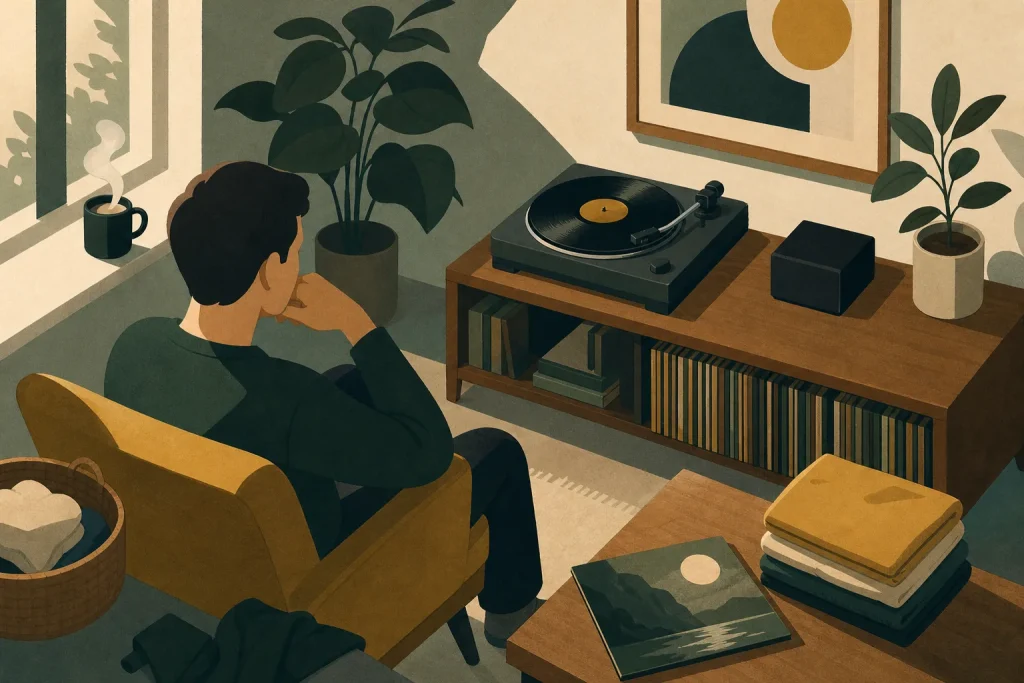
You put on an album while the kettle boils, open the lyric page on your phone, and soon you are reading about the second verse instead of hearing it. The record keeps moving. Your attention has left the room.
To hear an album as a whole, try giving it a few deliberate listens without following lyrics or reviews. You do not need specialist equipment or a notebook full of music theory. You need a way to reduce interruptions, a little patience, and attention to what changes between tracks as well as within them.
Choose a listening window and put the commentary away
Pick an album you can play from beginning to end in one sitting. Familiarity is useful but not required. A record you already know may reveal its structure more clearly; a new one lets you notice your first impressions before they become settled opinions.
Set your phone aside, close the lyrics page, and avoid reading reviews or track descriptions until you are finished. If you are using a streaming app, start the album itself rather than a radio mix or a playlist that may add tracks. If you are playing vinyl, check that the record is clean enough to listen comfortably and that you will be nearby to turn it over. The goal is not ceremonial silence. It is simply to avoid having another person’s description arrive before your own hearing does.
Choose a setting where you can sit or do a quiet, familiar task. Folding laundry is usually less absorbing than answering messages. Keep the volume comfortable and consistent. Turning it up for every quiet passage can make the album feel more dramatic than it is, while a level that is too low may hide details you want to follow.
Let the first pass establish the album’s shape
On the first listen, resist the urge to solve the record. Do not pause to identify every instrument or decide what a lyric means. Let the album run, and notice broad changes: a track that begins abruptly, an instrumental passage that gives way to singing, a sudden thinning of the sound, or a closing song that feels like an ending rather than just the next item.
Pay attention to energy as well as loudness. A quiet song can feel tense if its pulse is insistent; a loud one can feel relaxed if the rhythm leaves room to breathe. Notice whether your attention sharpens, drifts, or settles. Those responses are not verdicts on quality. They are useful clues about where the album gathers momentum or releases it.
If you want a record of the impression, write a few plain words after the album ends: “starts spare, grows restless, quiet middle, open ending.” Avoid a rating or a long interpretation. You are marking a rough map, not submitting liner notes for approval.
Notice how one track hands off to the next
Play the album again, or return to the transitions that stayed with you. Listen to the last moments of one track and the first moments of the next. Is there a pause, a fade, a count-in, or a sound that carries across the gap? Does the following song arrive as a contrast, or does it seem to continue a mood already in progress?
Notice changes in texture, too. A dense arrangement followed by a single voice can make the second track feel unusually exposed. A similar drum pattern in two songs may create continuity even when their melodies differ. A recurring keyboard sound, guitar tone, backing vocal, or bit of room noise can link separate tracks without announcing itself.
These connections need not be intentional for you to hear them, and you do not have to decide what they mean. The practical question is simpler: what does the transition make you expect, and what actually arrives? That gap between expectation and arrival is often where an album’s sequence becomes apparent.
Follow a recurring sound without chasing its source
Choose one sound to track through the album. It might be a handclap, a low hum, a repeated chord, a particular kind of percussion, or a voice layered behind the lead. You do not need to name the instrument correctly. “Soft, bell-like note” is a perfectly serviceable description; no examination board is waiting.
When the sound returns, notice its role. Does it sit in the background, take over a passage, or appear only at the edge of a track? Does it stay recognizable while the arrangement around it changes? A repeated sound can act like a thread, but it can also be used to unsettle the listener if it returns in a different context.
Try not to turn this into a scavenger hunt. If you spend the entire album waiting for one cymbal, you will miss the rest of the music. Follow the sound when it catches your attention, then let it go. The point is to practice noticing recurrence, not to prove that you can spot every one.
Track the shifts in energy across the middle
Albums often make their character clearest away from the opening and the finale. On another pass, attend to the middle stretch. Does the album maintain its pace, interrupt it, or gradually change direction? Are there short tracks that act as bridges? Does a sparse song create room for the next track to feel bigger, or does it make the next one seem less forceful?
Think in terms of movement rather than a single mood label. “Sad” or “upbeat” may be too broad to describe how the sequence works. You might hear a record move from close and restrained to crowded and restless, then return to something calm but less settled than it sounded at the start. The album’s order can shape that change even when the songs are distinct on their own.
Say you put on an unfamiliar album while making coffee, then notice that the first tracks feel clipped and nervous, while a later song has a steady pulse and a long instrumental ending. On the next listen, you pay attention to the transition into that song and hear the previous track’s final note linger before it begins. The observable result is modest but useful: you can describe how the middle changes the album’s pace without needing to consult the lyrics or a review.
Return to one passage and listen for its surroundings
After hearing the whole album, choose a passage that held your attention. Replay it in context, including the end of the preceding track and the start of the following one. A passage can sound different when you hear what leads into it and what follows. A quiet section may feel like a pause in isolation but like a turning point in sequence.
Listen for a change in arrangement: an instrument entering or dropping out, a beat becoming more insistent, a voice moving closer or farther back in the mix. Notice whether the passage repeats an earlier idea or avoids repeating it. You are not looking for hidden symbols. You are hearing the decisions that make one moment feel connected to another.
If you are listening on vinyl, take the side break as a natural pause rather than an invitation to check your phone. Turn the record, then resume with the same general attention. The break may divide the album into sections, though not every record makes the split feel meaningful. Streaming listeners can simply let the next track begin without skipping ahead to a favorite.
Write down what you heard before reading about it
Once the album is over, jot down a few observations in your notes app or on paper. Keep them concrete: a sound that returned, a transition that changed the mood, a stretch where the energy rose or fell, or a track that seemed to work differently in sequence than it might alone. You can also note questions. “Why does the final track sound more open?” is more useful than pretending you already know.
Only after that, if you want, read the lyrics or a review. Compare the outside account with your own notes without treating either as the official answer. A lyric can add a new meaning to a sound you noticed; a review can point out a connection you missed. It can also steer your next listen so strongly that every drum hit starts behaving like evidence. That is a familiar hazard of reading explanations before forming an impression.
Keep your notes short enough that you might use them again. A few lines can help when you return to the album later, especially if you want to hear whether a particular transition or recurring sound becomes clearer. The useful habit is not documenting every track. It is giving the album enough uninterrupted space to make its shape audible.
Let the album remain partly unresolved
There is no requirement to identify every sound, settle every interpretation, or decide whether the sequence succeeds. Some records reward repeated attention; others leave you with one clear impression and a handful of questions. Either is a reasonable outcome.
Next time, choose a different listening task. Follow the bass line, notice how the voice sits in the mix, or listen for the moment the album’s energy changes direction. Changing the focus keeps the process curious rather than dutiful. The lyrics and reviews will still be there afterward, patiently waiting to explain what you were already hearing.
Keep listening
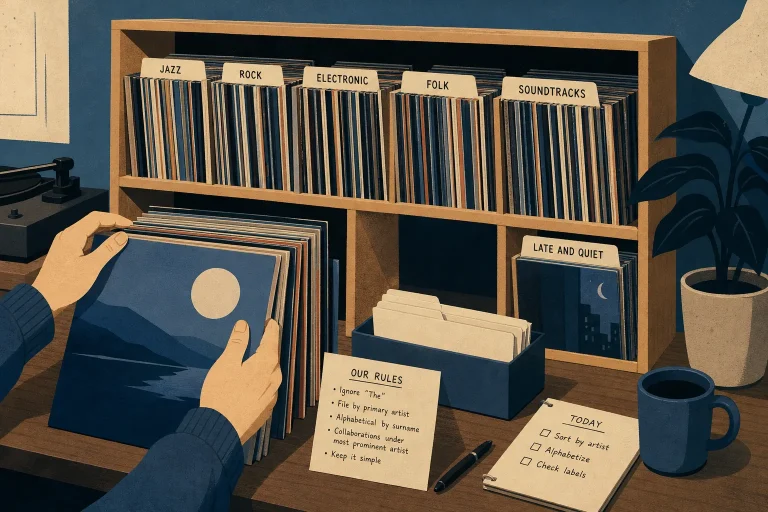
A Record Shelf That Makes Its Collection Easier to Browse
A week of small decisions can turn a crowded record shelf into a system you can…
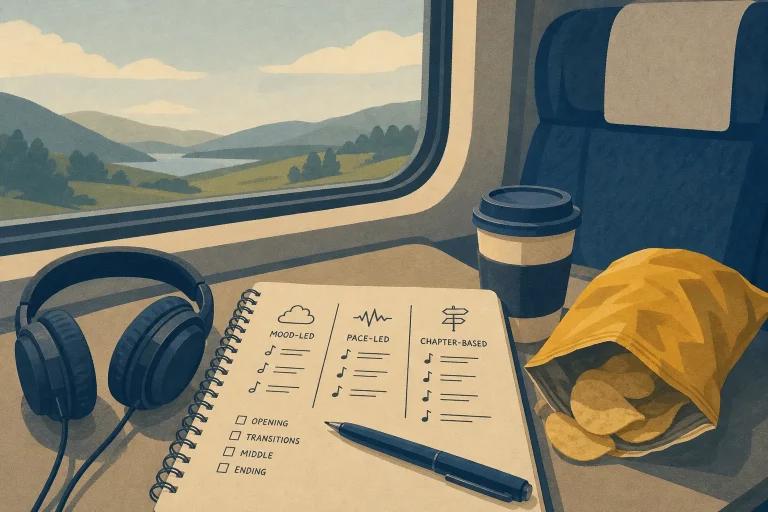
Three Ways to Sequence a Playlist for a Long Train Ride
Mood-led, pace-led, and chapter-based sequencing each shape a journey differently. Choose the approach that suits the…